 Eden
From the farm, for the planet
Two problems that happen to be each other's answer.
Tackles plastic pollution
Plastic is useful, which is why it is everywhere. It is made from fossil fuel, it does not break down, and it is now in the soil, the lakes and the food.
More than thirty African countries have banned single-use plastic. Almost none of them have an affordable material to use instead, so the ban holds on paper and the plastic keeps arriving. We are building the replacement, on the continent that needs it.
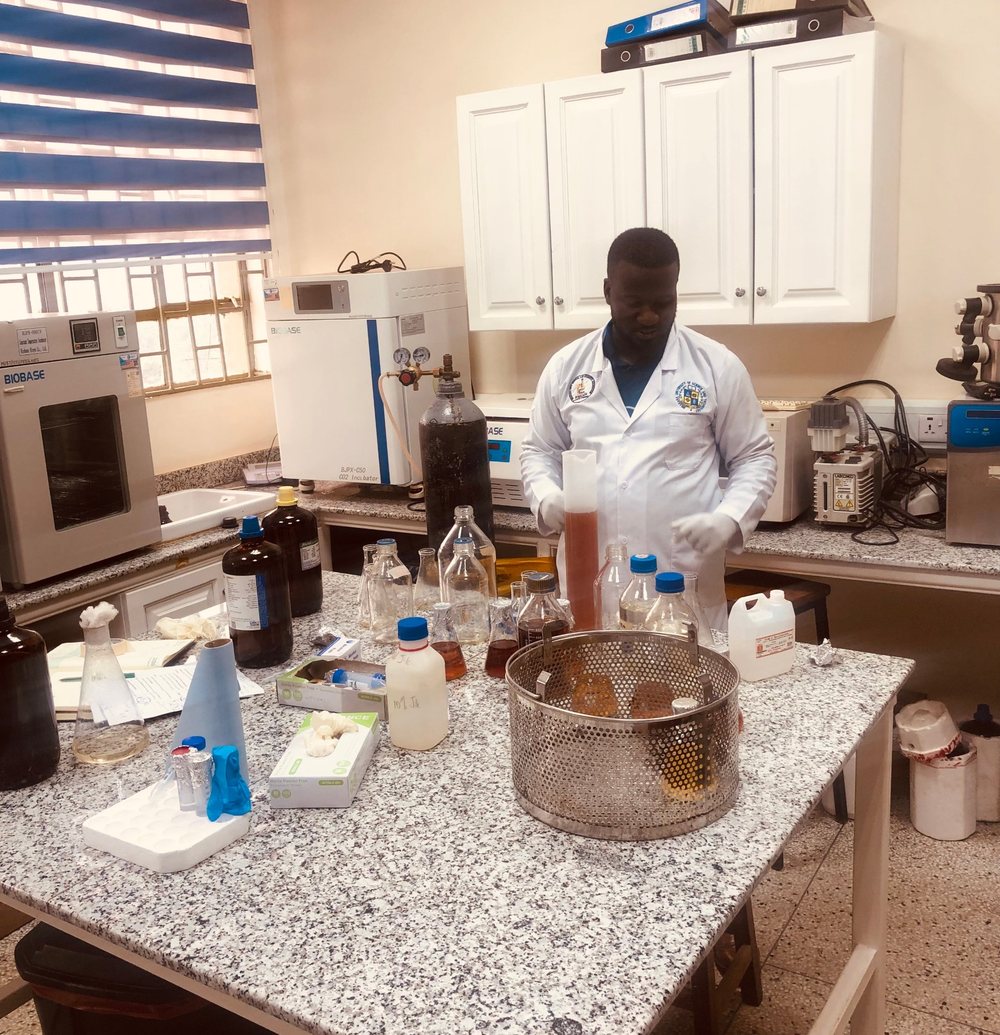
Turns waste into value
Uganda produces roughly 11 million tonnes of banana residue and 2.5 million tonnes of cassava residue every year. Most of it rots in the open or goes to landfill, and cities pay to move it — Kampala spends about $7 a tonne just to get banana waste out of the way.
That residue is sugar. Our bacteria eat it. The waste a processor currently pays to remove becomes the raw material for a product they can sell.
Income where the waste is
We do not build central factories. We licence the process to the mills, farms and cooperatives that already own the residue, so the plant, the jobs and the margin stay in the district the waste came from.

Built on green chemistry
Green chemistry has twelve principles for designing processes that do not create the problem they set out to solve. Three of them are the reason Eden is built the way it is.
Prevention
It is better to stop waste being made than to clean it up afterwards. We start from a residue that already exists, so nothing new has to be grown or extracted to make the material.
Renewable feedstocks
A raw material should be renewable rather than depleting. Ours regrows every season on farms that are already there, instead of being pumped out of the ground once.
Design for degradation
A product should be designed to break down at the end of its life instead of persisting. Ours is a natural polyester, made by microbes and taken apart by them.